

Surgical IBD LATAM Consortium
Correspondence: Bruno Augusto Alves Martins, Colorectal Surgery Department, Hospital Universitário de Brasília – University de Brasilia – Brazilian Hospital Services Company (HUB/UnB-EBSERH), Federal District, Brasilia, Brazil, 70830-200, Brazil. Email: bruno.augusto@ebserh.gov.br
Abstract
Introduction: Data on ileal pouch-anal anastomosis (IPAA) outcomes in ulcerative colitis (UC) patients from resource-constrained settings, such as Latin America, are limited. This study aimed to evaluate demographic characteristics, perioperative outcomes and long-term results of UC patients undergoing IPAA in Latin America.
Methods: A retrospective analysis was conducted on UC patients who underwent IPAA at 11 academic centres across Argentina, Brazil, Chile and Colombia between 2012 and 2022. Main outcome was 30-day postoperative complications.
Results: A total of 273 patients underwent IPAA; 49.8% were female, with a mean age of 37.5 years. Three-stage IPAA was performed in 68.9% of cases, while 31.1% underwent a two-stage approach. A minimally invasive technique was used in 50% of cases, with a 4% conversion rate. The 30-day complication rate was 36.6%, and 30-day mortality was 0.7%. On multivariate analysis, use of advanced therapies within 12 weeks of surgery was protective against postoperative complications (OR 0.24, p=0.008), whereas ASA III/IV status was independently associated with higher complication rates (OR 5.14, p=0.043). Long-term follow-up was available for 176 patients (median 60 months). IPAA-related complications occurred in 31.5%, including pouchitis, strictures, cuffitis and fistula formation. Pouch failure was observed in 8.5%.
Conclusion: IPAA for UC in Latin America shows acceptable morbidity, low mortality and long-term outcomes comparable to high-resource settings, supporting its feasibility in resource-constrained environments.
KEYWORDS: ileoanal pouches, inflammatory bowel diseases, restorative proctocolectomy, ulcerative colitis.
What does this paper add to the literature?
This paper represents one of the largest multicentre series to date evaluating IPAA outcomes in patients with ulcerative colitis from Latin America. By analysing real-world outcomes in a resource-constrained setting, this study highlights the feasibility of delivering complex surgical care for IBD patients outside high-income countries, thereby contributing valuable insights to the global literature.
INTRODUCTION
Ulcerative colitis (UC) is a chronic inflammatory bowel disease (IBD), and despite advancements in medical therapy, a subset of patients requires surgical intervention due to refractory disease, complications or dysplasia. Restorative proctocolectomy with ileal pouch-anal anastomosis (IPAA) has become the gold standard procedure for patients undergoing surgery for UC, providing favourable outcomes in terms of bowel function and quality of life [1]. Although extensive data on IPAA outcomes are available from developed countries [2-5], reports from low- and middle-income countries (LMICs) remain scarce.
Most studies on IPAA outcomes originate from North America, Europe and high-income regions of Asia, where healthcare systems provide advanced surgical techniques, structured follow-up care and access to specialised centres. These studies have characterised key demographic and clinical factors influencing outcomes, including postoperative complications, pouch survival and long-term functional results [6, 7]. However, the experience and outcomes of patients undergoing IPAA in resource-constrained settings, such as Latin America, remain underexplored, with most available data limited to single-centre reports involving small patient cohorts [8, 9]. Given the socioeconomic, healthcare and genetic differences in these populations, findings from high-income regions may not be directly generalisable to all regions of the globe.
Latin America represents a diverse and dynamic region with evolving healthcare systems and increasing rates of IBD, mirroring trends observed in more industrialised nations [10, 11]. Despite these developments, disparities in access to specialised care and surgical expertise persist, potentially impacting outcomes for complex procedures like IPAA. The limited data from LMICs hinder the ability to make evidence-based recommendations tailored to these populations and highlight the pressing need for region-specific research. Understanding the demographic characteristics and clinical outcomes of IPAA in Latin America is essential to improving surgical care and patient management.
Our study addresses this knowledge gap by presenting the demographics, perioperative outcomes and long-term results of UC patients undergoing IPAA in Latin America. By comprehensively analysing this population, we aim to contribute to the global understanding of surgical outcomes in UC while emphasising the unique challenges and opportunities present in LMICs. Our findings seek to inform clinical practice and guide future research in this critical area.
METHODS
Design and setting
Consecutive patients with UC who underwent IPAA at 11 IBD-specialised academic centres across Latin America (Argentina, Brazil, Chile and Colombia) between 2012 and 2022 were included in this study.
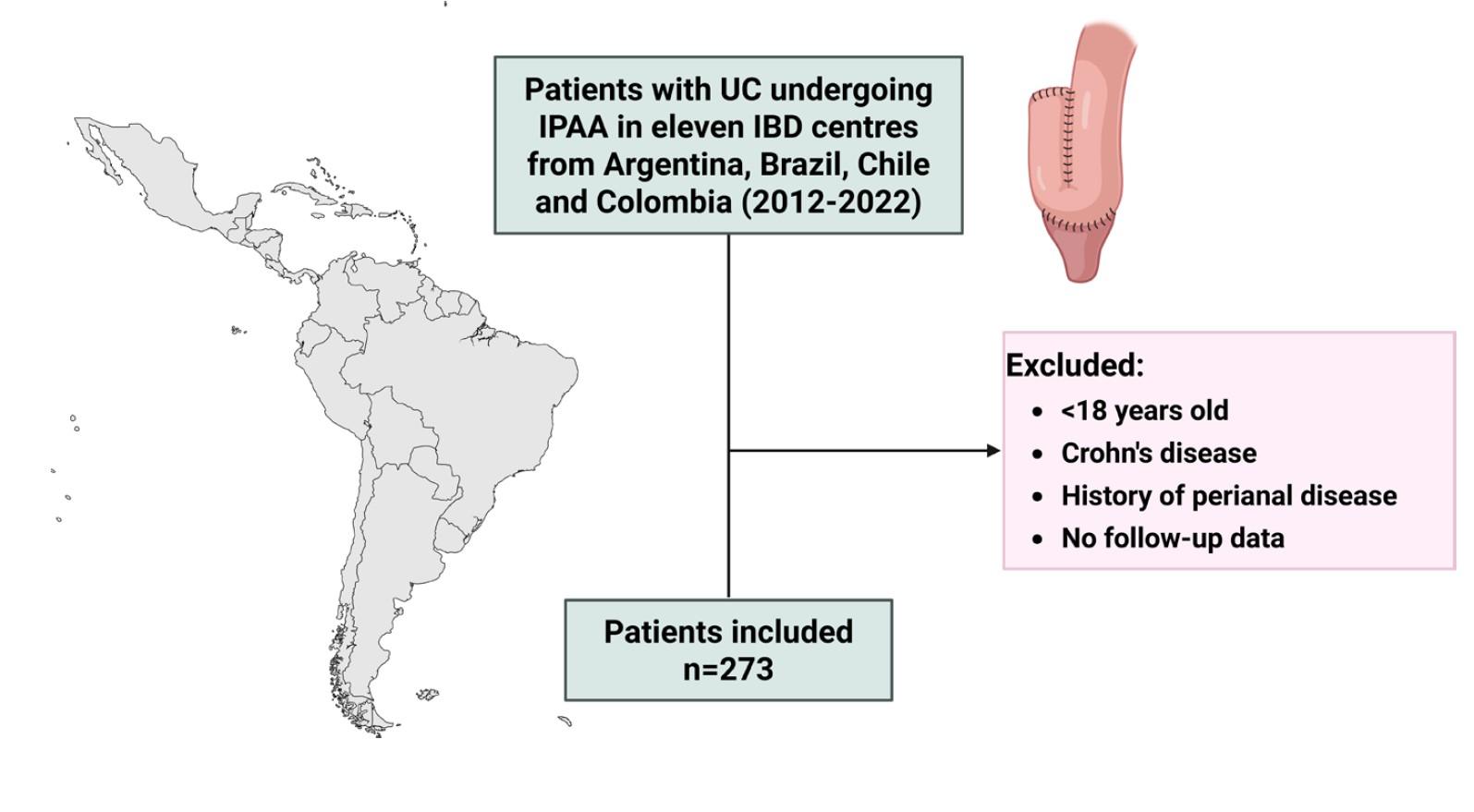
Inclusion criteria were patients aged over 18 years with a confirmed histological diagnosis of UC who underwent proctocolectomy with IPAA creation during the study period, performed in one, two or three stages. Indications for surgery included colonic dysplasia and medically refractory disease. Patients operated on for Crohn’s disease, those with UC who did not receive an IPAA, and patients with a history of perianal disease were excluded. Figure 1 shows the patient selection flowchart.
A retrospective analysis of medical records was conducted, and the collected data were entered into a database specifically created for this study using REDCap®, in compliance with international standards for the protection of personal information.
Variables
Data on comorbidities and previous exposure to medical treatment were collected to identify differences between groups before outcome analysis.
- Preoperative variables included: age, gender, Charlson comorbidity index, smoking status, body mass index (BMI), presence of preoperative anaemia, serum albumin levels, ASA score and history of previous abdominal surgeries. Disease-related variables included time from UC diagnosis to surgery, exposure to advanced therapies prior to surgery and exposure within 12 weeks of the operative procedure. Advanced therapies refer to biologics and small molecule oral medications that are typically used in moderate to severe forms of Crohn’s disease and UC [12].
- Intraoperative variables included: operating time, surgical urgency (elective vs. emergency), operative approach (minimally invasive vs. open), conversion rate, intraoperative complications and anastomotic characteristics.
- Postoperative factors included: length of hospital stay, complications stratified using the Clavien-Dindo classification (CDC) [13], readmission and reoperation rates, and 30-day mortality. Major complications were defined as CDC ≥III [14].
- Long-term follow-up variables included: time from IPAA creation to last follow-up visit, presence of pouch-related complications (i.e., pouchitis, strictures, fistulas), and pouch survival, defined as the patient maintaining a functional pouch at the last follow-up.
Outcomes
The main outcome was 30-day postoperative complications. Secondary outcomes were rates of minimally invasive approach (robotics or multiport laparoscopy), reoperations, rehospitalisations, 30-day mortality, long-term complications related to the pouch, and the rate of IPAA failure.
FIGURE 1. Patient selection flow chart.
Created in https://biorender.com.
Statistical analysis
A convenience sample size was used. Categorical variables were summarised as numbers and percentages (%), and the Chi-squared test or Fisher’s test (when appropriate) was used for comparison. Continuous variables are expressed as mean and standard deviation (SD) or median and interquartile range (IQR) according to distribution. If normality was assumed, they were compared using the Student’s t-test, and the Mann-Whitney test was used otherwise.
For the risk of surgical complications, univariate and multivariate analyses were performed using logistic regression, with the odds ratio (OR) and its 95% confidence interval (95%CI) calculated. In the multivariate analysis, those variables considered clinically relevant by the authors were included.
To calculate IPAA failure-free time, the Kaplan-Meier method was used with an estimate of 10-year survival and its corresponding 95%CI, the time during which at least 15% of the population remains at risk.
A p-value less than 0.05 or an OR whose CI does not contain the value 1 was considered significant. The software used was SPSS 22.0® (IBM Corp., Armonk, NY, USA).
Ethical considerations
This study was conducted in accordance with the Declaration of Helsinki, the International Conference on Harmonisation Good Clinical Practice (ICH-GCP) guidelines, and applicable national and institutional research ethics regulations.
Given the non-interventional, observational design and exclusive use of anonymised data, the requirement for written informed consent was waived in countries where permitted by law. In jurisdictions where informed consent was required, it was obtained in accordance with local institutional review board (IRB) or ethics committee protocols. Ethics approval was obtained at all participating centres prior to patient enrolment.
No experimental or investigational procedures were performed. All surgical and perioperative management decisions were made by the attending clinical teams according to institutional standards of care. The study involved no deviations from routine clinical practice, and patients were not subjected to additional risks due to study participation.
To safeguard confidentiality, only de-identified data were collected. Each site anonymised data prior to entry into the centralised database. The electronic data capture system (REDCap®) was hosted on a secure server at CEMIC University Hospital, Buenos Aires, Argentina, with access restricted to authorised personnel via encrypted, password-protected logins. The platform maintains a complete audit trail and is compliant with international data protection standards, including the General Data Protection Regulation (GDPR), where applicable.
Regional investigators coordinated oversight of data integrity and protocol compliance, and data monitoring processes were implemented to ensure accuracy, completeness and consistency across participating sites.
RESULTS
Clinical characteristics
A total of 273 patients who underwent IPAA for UC at the participating centres during the study period were included. Of these, 136 (49.8%) were female, and the mean age was 37.5 years (SD 14). Most patients had a low Charlson comorbidity index, and the median BMI was 22.5 kg/m² (SD 5.2), with only 4.9% classified as obese.
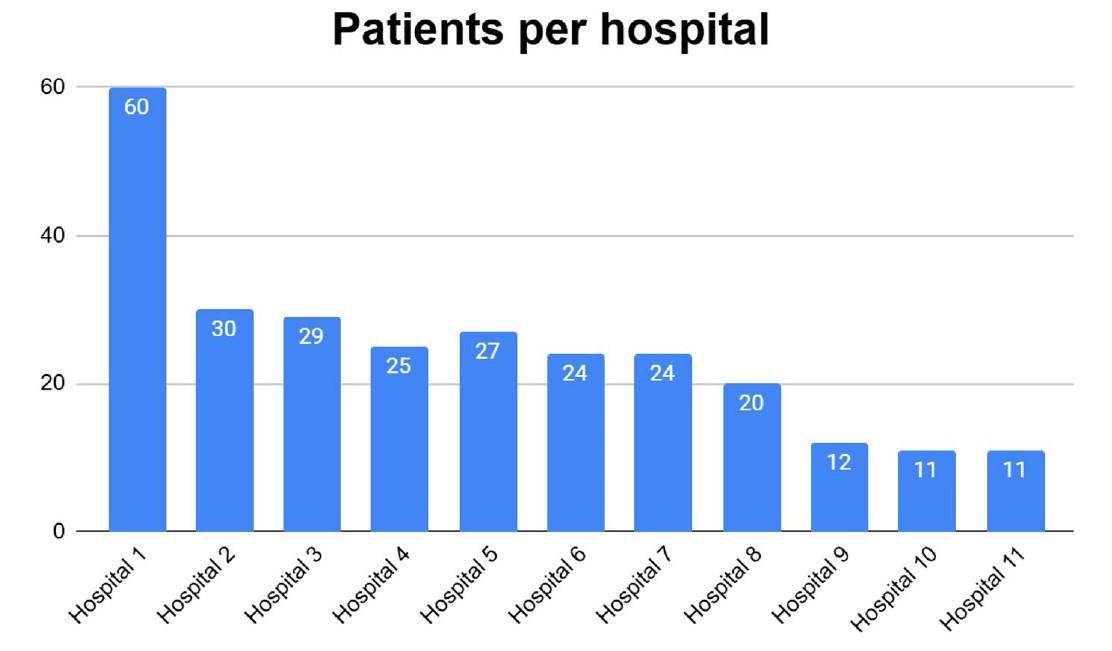
Table 1 summarises preoperative and intraoperative characteristics, and Figure 2 shows the distribution of patients across the participating centres.
Regarding disease-related variables, the mean time from diagnosis to surgery was 8 years (SD 8.4). Nearly half of the patients had been exposed to at least one line of advanced therapy before surgery, with a median time from initiation of therapy to surgery of 18 months. None of the patients was using corticosteroids at the time of IPAA construction. Overall, 68.9% underwent a three-stage IPAA, and 31.1% a two-stage procedure.
| Variable | All patients (n=273) |
|---|---|
| Female, n (%) | 136 (49.8) |
| Age (years, mean – SD) | 37.5 (14) |
| Smoking, n (%) | 24 (8.8) |
| Charlson comorbidity score, n (%) | |
| 0-1 | 962 (96.3) |
| 2-3 | 31 (3.1) |
| >3 | 6 (0.6) |
| BMI (mean, SD) | 22.5 (5.2) |
| Obese, n (%) | 8 (4.9) |
| Missing, n (%) | 111 (40.7) |
| Preoperative Anaemia (%) | 123 (45.1) |
| Preoperative albumin (mean, SD) | 3.9 (0.72) |
| Low albumin (<3 g/dL), n (%) | 22 (8.1) |
| Missing, n (%) | 90 (33) |
| Previous abdominal procedures, n (%) | 164 (60.3) |
| Missing, n (%) | 1 (0.37) |
| Time from diagnosis to surgery (years, mean, SD) | 8 (8.4) |
| Missing, n (%) | 4 (1.5) |
| Previous exposure to advanced therapies, n (%) | 126 (46.2) |
| Time from starting advanced therapies to surgery (months, median, IQR) | 18 (8-36) |
| Missing, n (%) | 2 (0.73) |
| Number of advanced therapies received prior to surgery, n (%) | |
| 1 | 72 (57.1) |
| 2 | 36 (28.6) |
| >3 | 18 (14.3) |
| ASA score, n (%) | |
| I | 82 (30) |
| II | 164 (60.1) |
| III/IV | 15 (5.5) |
| Operating time (minutes, mean, SD) | 226 (70) |
| Missing, n (%) | 36 (13.2) |
| Minimally invasive approach, n (%) | 141 (51.6) |
| Conversion rate | 11 (4) |
| Intraoperative complications, n (%) | 18 (6.6) |
| IPAA stages, n (%) | |
| 2-stage | 85 (31.1) |
| 3-stage | 188 (68.9) |
| Type of anastomosis, n (%) | |
| Hand-Sewn | 15 (5.5) |
| Stappled | 258 (94.5) |
Abbreviations: ASA, American Society of Anaesthesiologists physical status; BMI, body mass index; IPAA, ileoanal pouch anastomosis.
Operative details
At the time of surgery, 90.1% of patients were classified as ASA I or II. The mean operating time was 226 min (SD 70). A minimally invasive approach was used in 51.6% of cases, with a conversion rate to open surgery of 4%. Intraoperative complications occurred in 18 patients (6.6%), including bleeding and small bowel injury. Most IPAA constructions (94.5%) were stapled, with 5.5% hand-sewn.
Primary outcomes
Overall, 100 patients (36.6%) experienced complications within 30 days postoperatively. Of these, 59% were classified as minor and 41% as major complications. Regarding the most common complications, 28 patients presented postoperative pelvic abscess, 20 patients suffered a prolonged postoperative ileus, 13 patients had abdominal obstruction after surgery, nine patients had fever, six patients had bleeding and the rest of the patients had other complications, including urinary tract infection, pneumonia, ileostomy complications and ureteric injuries.
Postoperative outcomes
Table 2 summarises the main postoperative outcomes. The median hospital stay was 6 days (IQR 5-9), and 5.1% of patients required prolonged ICU admission. The reoperation and readmission rates were both 9.5%. The most common indications for reoperation were intestinal obstruction (28%), anastomotic leak (25%), bleeding (9.4%), fascial dehiscence (9%), abdominal abscess (8%) and other causes (20.6%).
Two patients (0.7%) died within 30 days of the procedure.
Long-term outcomes
Following IPAA, 134 patients (49.1%) underwent pouchoscopy, with a mean interval of 7.4 months (SD 3.2) from surgery. Endoscopic findings were normal in 85 patients (63.9%); pouchitis was identified in 36 patients (27.1%), and mucosal erosions or ulcers in 12 patients (9%).
Long-term follow-up was available for 176 patients, with a median follow-up duration of 60 months (IQR 26-99). During this period, 73 patients (31.5%) developed IPAA-related complications, with a mean time to onset of 18 months (SD 25). The most frequent complications were pouchitis (42.5%), anastomotic strictures (18%), cuffitis (12%) and pouch-related fistula (7%).
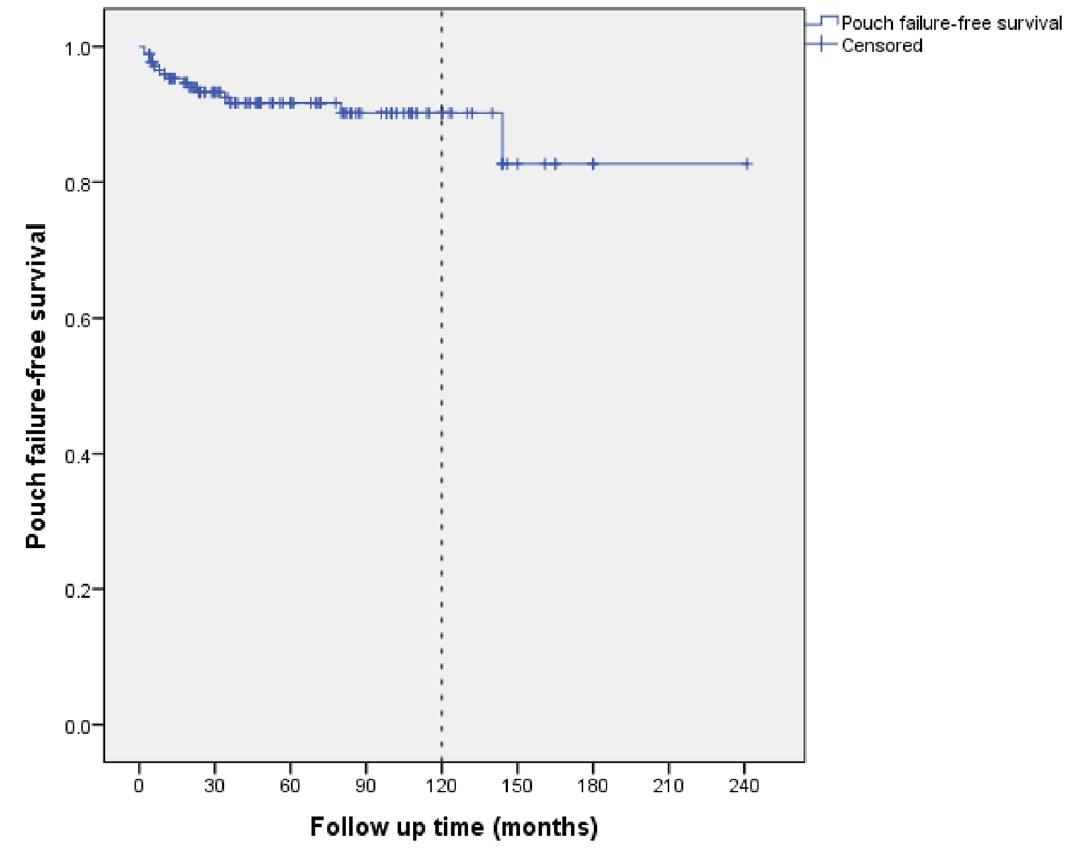
Figure 3 illustrates the IPAA survival curve for the cohort. Pouch failure occurred in 15 patients (8.5%) at a mean of 27 months (SD 38) postoperatively. Treatments for pouch failure included diverting ileostomy in nine patients and pouch excision with end ileostomy in six patients; no redo pouches were performed. The estimated 10-year pouch survival rate was 90.2% (95% CI, 85.1-95.3).
FIGURE 2 Patients recruited in each hospital participating in the study.
| Variable | All patients (n=273) |
|---|---|
| Hospitalisation days (median, IQR) | 6 (5-9) |
| Missing, n (%) | 33 (12.1) |
| Prolonged requirement of ICU, n (%) | 14 (5.1) |
| Complications, n (%) | 100 (36.6) |
| – Minor | 59 (59) |
| – Major | 41 (41) |
| Reoperation, n (%) | 32 (11.7) |
| Readmission, n (%) | 26 (9.5) |
| Mortality, n (%) | 2 (0.7) |
Abbreviations: ICU, intensive care unit.
Multivariate analysis
In multivariate analysis, advanced therapy use within 12 weeks of surgery was associated with a reduced risk of postoperative complications (OR 0.24, p=0.008), while ASA III/IV status was independently associated with an increased risk of complications (OR 5.14, p=0.043). Full results are presented in Table 3.
DISCUSSION
This multicentre retrospective study provides a comprehensive analysis of the short and long-term outcomes of IPAA for UC in Latin America, contributing to the limited body of evidence on this topic from LMICs. The findings highlight both the feasibility and challenges of performing IPAA in a region with diverse healthcare systems and evolving IBD management practices.
Considering the various challenges of implementing minimally invasive surgical programmes in LMICs, it is commendable that approximately half of the patients in this cohort underwent a laparoscopic approach. A retrospective study of patients undergoing IPAA for UC between 2011 and 2022 at the University Hospitals of Leuven revealed that 86% of these cases were performed laparoscopically [15]. This finding suggests that the initial Latin American experience may develop and converge with the outcomes reported in other high-volume referral centres. Although there is a trend toward a significant increase in robotic colorectal procedures throughout LATAM [16], only three robotic IPAAs were noted in this cohort. This may suggest that the adoption of robotic surgery is experiencing a delay comparable to the one seen when the laparoscopic approach was first introduced in IBD surgery [17].
Almost 70% of the patients in this cohort had a three-stage IPAA. A staged restorative proctocolectomy seeks to reduce the devastating complications of an anastomotic leak. It also allows confirming UC in the surgical specimen, nutritional optimisation and tapering of steroids [18]. Although recent evidence suggests that a modified two-stage IPAA may be associated with fewer complications and a shorter length of stay compared to three-stage or standard two-stage IPAA [1], Latin American surgeons have not yet adopted this approach. One possible reason is the need for diligent postoperative follow-up in modified two-stage IPAA cases to detect potential complications early, which can be difficult to achieve in some healthcare settings.
The overall postoperative complication rate of 36.6% observed in this study is consistent with previously reported rates from high-income regions [19, 20]. Baek and colleagues evaluated short-term outcomes in 588 patients who underwent laparoscopic IPAA at the Mayo Clinic in Rochester, Minnesota, between April 1999 and July 2012. 93.9% of procedures were performed for UC, and complications occurred in 36.9% of patients; no mortality was reported [19]. In Australia, Lim and colleagues reported a 34.9% rate of early complications among 212 consecutive UC patients who underwent IPAA at the Royal Brisbane and Women’s Hospital between 1990 and August 2016 [20].
FIGURE 3 Estimated IPAA survival over time.
| Variables | OR | Standard error | p | 95%CI |
|---|---|---|---|---|
| Age | 0.99 | 0.12 | 0.592 | 0.96-1.02 |
| Female sex | 2.04 | 0.99 | 0.141 | 0.79-5.27 |
| Smoking | 2.56 | 2.02 | 0.233 | 0.55-12 |
| Preoperative anaemia | 1.32 | 0.62 | 0.548 | 0.53-3.30 |
| Previous abdominal procedure | 2.44 | 1.30 | 0.095 | 0.86-6.96 |
| Perioperative biologics | 0.24 | 0.13 | 0.008 | 0.08-0.70 |
| Conversion to open surgery | 0.43 | 0.44 | 0.407 | 0.06-3.16 |
| Intraoperative complications | 1.30 | 1.12 | 0.760 | 0.24-7.08 |
| 3-stage IPAA (vs. 2-stage) | 0.85 | 0.41 | 0.737 | 0.33-2.20 |
| High BMI | 1.06 | 1.08 | 0.950 | 0.15-7.71 |
| ASA III/IV | 5.14 | 4.16 | 0.043 | 1.05-25.10 |
Note: Bold-faced values indicate statistically significant at alpha <0.05.
Abbreviations: ASA, American Society of Anaesthesiologists physical status; BMI, body mass index; IPAA, ileoanal pouch anastomosis.
Although the postoperative morbidity rate was comparable with previously reported rates from high-income areas, the proportion of major complications (41%) was relatively high. In the previously presented Mayo Clinic and Royal Brisbane cohorts, only 9.7% of patients had major complications [19, 20]. This suggests that the burden of severe morbidity may be more pronounced in LMIC settings. This may be partially explained by the high proportion of patients undergoing surgery for advanced disease (delayed surgical indication) and by prior exposure to multiple lines of medical therapy, a phenomenon described in other LMIC IBD cohorts [21].
Interestingly, using advanced therapies within 12 weeks before surgery was identified as a protective factor against early postoperative complications in the multivariate analysis (OR: 0.24, p=0.008). This controversial matter has been explored before, with some studies suggesting that the use of perioperative advanced therapies is not associated with more complications [22]. In contrast, other studies have found a positive association between these agents and postoperative adverse events in IBD patients [23, 24]. The analysis of perioperative advanced therapies was limited by the lack of detailed data on specific agents across centres, precluding subgroup analyses by biologic class. Therefore, the observed protective association should be interpreted with caution and may reflect broader aspects of perioperative optimisation rather than a direct pharmacological effect. Further prospective studies are needed to confirm this association and clarify the role of biologics in perioperative outcomes in resource-constrained environments.
The current report on the rate of pouch survival (estimated to be 90.2% at 10 years) is comparable to previous reports from other regions [25, 26]. Notably, no redo pouches were documented in this cohort, which may reflect limited access to tertiary centres with specialised surgical expertise in the region. A Swedish population-based cohort study of 1796 UC patients who underwent IPAA reported 10-year pouch survival rates of 94% for primary IPAA and 92% for secondary (subsequent to a previous ileorectal anastomosis). Two patients underwent a redo pouch [25]. Heuthorst and colleagues conducted a systematic review and meta-analysis that included 30 studies, comprising a total of 22,978 patients who underwent IPAA, of whom 20,839 had UC. They observed pooled pouch failure rates of 7.8% and 10.3% after a median follow-up of ≥5 and ≥10 years following IPAA, respectively [26].
Regarding long-term complications, pouchitis emerged as the most frequent adverse event (42.5%), which is consistent with global literature [27]. However, the relatively low rate of endoscopic pouch assessment (49.1%) suggests that subclinical inflammation may have been underdiagnosed in this population. Implementing structured surveillance protocols and improving access to pouchoscopy could enhance early detection and management of pouch-related complications.
This study has several limitations that must be acknowledged. First, it is a retrospective analysis, which is inherently subject to selection bias, missing data and the limitations associated with retrospective data collection. Although the study included patients from 11 specialised centres across four countries, nearly 20% of the cohort came from a single centre, and the participating institutions are predominantly academic and high-volume centres. Consequently, the findings may not be generalisable to all healthcare settings in Latin America, particularly to lower-volume or non-academic hospitals. As referral IBD-specialised academic centres, these institutions are more likely to manage a higher proportion of complex cases requiring IPAA. Accordingly, although full population-level representation cannot be ensured, this cohort likely provides a robust and pragmatic reflection of real-world outcomes.
Second, there was heterogeneity among centres regarding surgical techniques, perioperative management protocols, and access to resources such as advanced surgical technologies and postoperative care, which may have influenced outcomes. Standardisation of surgical indications, staging strategies and postoperative follow-up protocols across centres was not possible, potentially introducing variability in the results.
Third, although long-term follow-up data were available for a considerable proportion of the cohort, not all patients completed extended follow-up, and the potential for loss to follow-up may have impacted the assessment of long-term outcomes such as pouch function and survival. Fourth, the relatively low rate of endoscopic pouch surveillance limits the interpretation of subclinical pouch complications, and underdiagnosis of conditions such as asymptomatic pouchitis cannot be ruled out. The absence of a control group from high-income countries precludes direct comparative analysis and limits the ability to attribute differences specific to the resource-constrained context. Lastly, some information related to causes associated with reoperations and prolonged ICU was not specified in the database.
Nevertheless, this study has several notable strengths. It represents one of the largest multicentre series to date evaluating IPAA outcomes in UC patients from Latin America, a region where data remain scarce. The inclusion of 11 academic centres across four countries enhances the generalisability of the findings to a broader Latin American context. Additionally, the study provides both short- and long-term outcomes, offering valuable insights into postoperative complications, pouch survival and functional results over an extended follow-up period. The use of standardised data collection methods and compliance with international data protection standards further strengthen the reliability and validity of the reported results. Finally, by analysing real-world outcomes in a resource-constrained setting, this study highlights the feasibility of delivering complex surgical care for IBD patients outside high-income countries, contributing important knowledge to the global literature.
In conclusion, in this multicentre Latin American cohort, IPAA for UC demonstrated acceptable short-term morbidity and low mortality, with long-term outcomes comparable to those reported in high-income countries. Despite the challenges inherent to resource-constrained settings, IPAA remains a feasible and effective surgical option. However, the relatively high rate of major complications underscores the need for continued efforts to optimise perioperative care and improve access to specialised surgical expertise. These findings contribute to the growing body of evidence supporting the safe implementation of complex IBD surgery in LMICs and highlight the importance of regional collaborative research to further refine surgical strategies and patient outcomes.
Future efforts should focus on creating regional registries and conducting prospective collaborative studies to further characterise the impact of socioeconomic factors, surgical techniques and perioperative optimisation strategies on IPAA outcomes in Latin America. Additionally, fostering international partnerships and training programs could help bridge the gap in access to advanced surgical care for IBD patients in LMICs.
ACKNOWLEDGEMENTS
Surgical IBD LATAM Consortium Collaborative members: Nicolás Avellaneda (General Surgery Department, Hospital Universitario CEMIC, Argentina); Pamela Jacinto (Colorectal Surgery Department, Hospital Bonorino Udaondo, Argentina); Karina Collia Ávila (Colorectal Surgery Department, Hospital Bonorino Udaondo, Argentina); Mariana Coraglio (Colorectal Surgery Department, Hospital Bonorino Udaondo, Argentina), Claudio Saddy Rodrigues Coy (Inflammatory Bowel Disease Research Laboratory, Colorectal Surgery Unit, Department of Surgery, School of Medical Sciences, University of Campinas (Unicamp) Campinas, Brazil); Rogerio S Parra (Department of Surgery and Anatomy, Ribeirão Preto Medical School, University of São Paulo, Brazil), Omar Féres (Department of Surgery and Anatomy, Ribeirão Preto Medical School, University of São Paulo, Brazil), Henrique Sarubbi Filmann (Surgery Department, Pontificia Universidad Católica de Rio Grande do Sul, Brasil); Rogerio Saad Hossne (Colorectal Surgery Department, Paulista State University UNESP, Brazil); Juan Pablo Muñoz (Colorectal Surgery Department, Hospital Bonorino Udaondo, Argentina, Colorectal Surgery Department, Nueva Proctología, Argentina); Marcos Riccardini (Colorectal Surgery Department, Nueva Proctología, Argentina); Rafael García Duperly (Colorectal Surgery Department, Fundación Santa Fé de Bogotá, Colombia); Eduardo Londoño-Schimmer (Colorectal Surgery Department, Fundación Santa Fé de Bogotá, Colombia), Felipe Bellolio (Coloproctology Unit, Digestive Surgery Department, Pontificia Universidad Católica de Chile, Chile); Andrés Iglesias (Coloproctology Unit, Digestive Surgery Department, Pontificia Universidad Católica de Chile, Chile), Nicolás Rotholtz (Colorectal Surgery Service, General Surgery Department, Hospital Aleman de Buenos Aires, Argentina); Camila Brass Harriott (Colorectal Surgery Service, General Surgery Department, Hospital Aleman de Buenos Aires, Argentina), Gustavo Rossi (Section of Colorectal Surgery, Department of General Surgery, Hospital Italiano de Buenos Aires, Buenos Aires, Argentina); Juan Pablo Campana (Section of Colorectal Surgery, Department of General Surgery, Hospital Italiano de Buenos Aires, Buenos Aires, Argentina), Juan Ricardo Marquez V (Coloproctology Institute, Clínica Las Américas, Colombia); Antônio Lacerda Filho (Coloproctology Institute, Clinica Las Américas, Colombia); Adriana Cherem Alves (Hospital das Clinicas da Universidade Federal de Minas Gerais (UFMG School Hospital), Brazil); Augusto Carrie (General Surgery Department, Hospital Universitario CEMIC, Argentina); Lucio Sarubbi Fillmann (Surgery Department, Pontificia Universidad Católica de Rio Grande do Sul, Brasil); Bruno Augusto Alves Martins (Colorectal Surgery Department, Hospital Universitário de Brasília – University de Brasilia – Brazilian Hospital Services Company (HUB/UnB-EBSERH), Federal District, Brasilia, Brazil); Carlos Ramon Silveira Mendes (Colorectal Surgery Department, Instituto Ramon Mendes, Brazil); Mariano Cillo (Colorectal Surgery Department, Hospital Británico, Argentina); Eron Fábio Miranda (Colorectal Surgery Unit, IBD Outpatient Clinics, Pontificia Universidade Católica do Paraná (PUC-PR), Curitiba, Brazil); Paulo Gustavo Kotze (Colorectal Surgery Unit, IBD Outpatient Clinics, Pontificia Universidade Católica do Paraná (PUC-PR), Curitiba, Brazil). The Article Processing Charge for the publication of this research was funded by the Coordenação de Aperfeiçoamento de Pessoal de Nível Superior Brasil (CAPES) (ROR identifier: 00x0ma614).
FUNDING INFORMATION
No financial compensation was provided for participation in this study, either to the patients or the research team.
CONFLICT OF INTEREST STATEMENT
No conflict of interests declared by any of the authors.
DATA AVAILABILITY STATEMENT
The data that support the findings of this study are available from the corresponding author upon reasonable request.
ETHICS STATEMENT
Given the non-interventional, observational design and exclusive use of anonymised data, the requirement for written informed consent was waived in countries where permitted by law. In jurisdictions where informed consent was required, it was obtained in accordance with local institutional review board (IRB) or ethics committee protocols. Ethics approval was obtained at all participating centres prior to patient enrolment. No experimental or investigational procedures were performed.
AI STATEMENT
No generative AI tools were used in the writing or preparation of this manuscript.
REFERENCES
- , , , , , , et al. ECCO guidelines on therapeutics in ulcerative colitis: surgical treatment. J Crohns Colitis. 2022; 16(2): 179–189. https://doi.org/10.1093/ecco-jcc/jjab177
- , , , . Colectomy and the incidence of postsurgical complications among ulcerative colitis patients with private health Insurance in the United States. Am J Gastroenterol. 2008; 103(7): 1737–1745. https://doi.org/10.1111/j.1572-0241.2008.01867.x
- , , , . Colectomy subtypes, follow-up surgical procedures, postsurgical complications, and medical charges among ulcerative colitis patients with private health insurance in the United States: inflammatory bowel diseases. Inflamm Bowel Dis. 2009; 15(4): 566–575. https://doi.org/10.1002/ibd.20810
- , , , , , , et al. Comparison of costs and quality of life in ulcerative colitis patients with an ileal pouch-anal anastomosis, ileostomy and anti-TNFα therapy. J Crohns Colitis. 2015; 9(11): 1016–1023. https://doi.org/10.1093/ecco-jcc/jjv134
- , , , , , . Functional outcomes after transanal ileal pouch–anal anastomosis for ulcerative colitis: narrative review of the current literature. Tech Coloproctol. 2023; 27(9): 713–719. https://doi.org/10.1007/s10151-023-02798-y
- , , , , , , et al. Restorative proctocolectomy: an example of how surgery evolves in response to paradigm shifts in care. Color Dis. 2017; 19(11): 1003–1012. https://doi.org/10.1111/codi.13699
- . Functional outcome and quality of life after ileal pouch-anal anastomosis within a defined population in Sweden. Dig Dis. 2019; 37(1): 1–10. https://doi.org/10.1159/000491921
- , , , , , , et al. Short- and long-term outcomes of ileal pouch-anal anastomosis for ulcerative colitis. Revista do Hospital das Clínicas. 2003; 58(4): 193–198. https://doi.org/10.1590/S0041-87812003000400002
- , , , , , . Resultados inmediatos y alejados del reservorio ileal con anastomosis reservorio-anal practicado en forma simultánea o diferida con la proctocolectomía en pacientes portadores de colitis ulcerosa. Revista Chilena de Cirugía. 2016; 68(5): 368–372. https://doi.org/10.1016/j.rchic.2016.01.001
- , , , , , , et al. Progression of inflammatory bowel diseases throughout Latin America and the Caribbean: a systematic review. Clin Gastroenterol Hepatol. 2020; 18(2): 304–312. https://doi.org/10.1016/j.cgh.2019.06.030
- , , , , , , et al. Challenges in the diagnosis and treatment of inflammatory bowel disease in Latin America. Lancet Gastroenterol Hepatol. 2024; 9(3): 263–272. https://doi.org/10.1016/S2468-1253(23)00284-4
- , , . Advanced therapies for inflammatory bowel disease: navigating payor and financial challenges. Curr Gastroenterol Rep. 2024; 26(3): 68–76. https://doi.org/10.1007/s11894-024-00916-w
- , , . Classification of surgical complications: a new proposal with evaluation in a cohort of 6336 patients and results of a survey. Ann Surg. 2004; 240(2): 205–213. https://doi.org/10.1097/01.sla.0000133083.54934.ae
- , , , , , , et al. Reporting of major complications in randomized clinical trials in pancreatic surgery according to Clavien–Dindo classification. BJS Open. 2025; 9(5):zraf103. https://doi.org/10.1093/bjsopen/zraf103
- , , , , , , et al. Ileal pouch-anal anastomosis for ulcerative colitis: 30-year analysis on surgical evolution and patient outcome. BJS Open. 2024; 9(1):zrae111. https://doi.org/10.1093/bjsopen/zrae111
- , , . Robotic colorectal surgery in Latin America: a systematic review on surgical outcomes. Front Surg. 2024; 11:1480444. https://doi.org/10.3389/fsurg.2024.1480444
- . Laparoscopic surgery for Crohn disease: a brief review of the literature. Clin Colon Rectal Surg. 2013; 26(2): 122–127. https://doi.org/10.1055/s-0033-1348051
- , , . The benefits and drawbacks of staging pelvic pouches. Clin Colon Rectal Surg. 2022; 35(6): 445–452. https://doi.org/10.1055/s-0042-1758217
- , , , , , , et al. Safety, feasibility, and short-term outcomes in 588 patients undergoing minimally invasive ileal pouch-anal anastomosis: a single-institution experience. Tech Coloproctol. 2016; 20(6): 369–374. https://doi.org/10.1007/s10151-016-1465-z
- , , , , , , et al. Ileal pouch-anal anastomosis for ulcerative colitis: an Australian Institution’s experience. Ann Coloproctol. 2021; 37(5): 318–325. https://doi.org/10.3393/ac.2020.08.26
- , , , , , , et al. Earlier surgery is associated to reduced postoperative morbidity in ileocaecal Crohn’s disease: results from SURGICROHN – LATAM study. Dig Liver Dis. 2023; 55(5): 589–594. https://doi.org/10.1016/j.dld.2022.09.011
- , , , , , , et al. Safety of perioperative treatment with biologics in patients with inflammatory bowel disease undergoing bowel surgery: experience from a large urban center. PLoS One. 2024; 19(1):e0290887. https://doi.org/10.1371/journal.pone.0290887
- , , , . Systematic review and meta-analysis: risks of postoperative complications with preoperative use of anti-tumor necrosis factor-alpha biologics in inflammatory bowel disease patients. Eur J Gastroenterol Hepatol. 2021; 33(6): 799–816. https://doi.org/10.1097/MEG.0000000000001944
- , , , , , . The effect of anti-tumor necrosis factor-alpha therapy within 12 weeks prior to surgery on postoperative complications in inflammatory bowel disease: a systematic review and meta-analysis. J Clin Med. 2022; 11(23):6884. https://doi.org/10.3390/jcm11236884
- , , , . Survival of ileal pouch anal anastomosis constructed after colectomy or secondary to a previous ileorectal anastomosis in ulcerative colitis patients: a population-based cohort study. Scand J Gastroenterol. 2017; 52(5): 531–535. https://doi.org/10.1080/00365521.2016.1278457
- , , , , , . Ileal pouch-anal anastomosis complications and pouch failure: a systematic review and meta-analysis. Ann Surg Open. 2021; 2(2):e074. https://doi.org/10.1097/AS9.0000000000000074
- . Acute and chronic pouchitis—pathogenesis, diagnosis and treatment. Nat Rev Gastroenterol Hepatol. 2012; 9(6): 323–333. https://doi.org/10.1038/nrgastro.2012.58
Examen de urodinamia en el Instituto de Coloproctología
Conoce la preparación y las recomendaciones para realizar tu urodinamia en el Instituto de coloproctología

AGENDA TU CITA EN EL INSTITUTO DE COLOPROCTOLOGÍA
Con médicos urólogos expertos
Recent Comments